

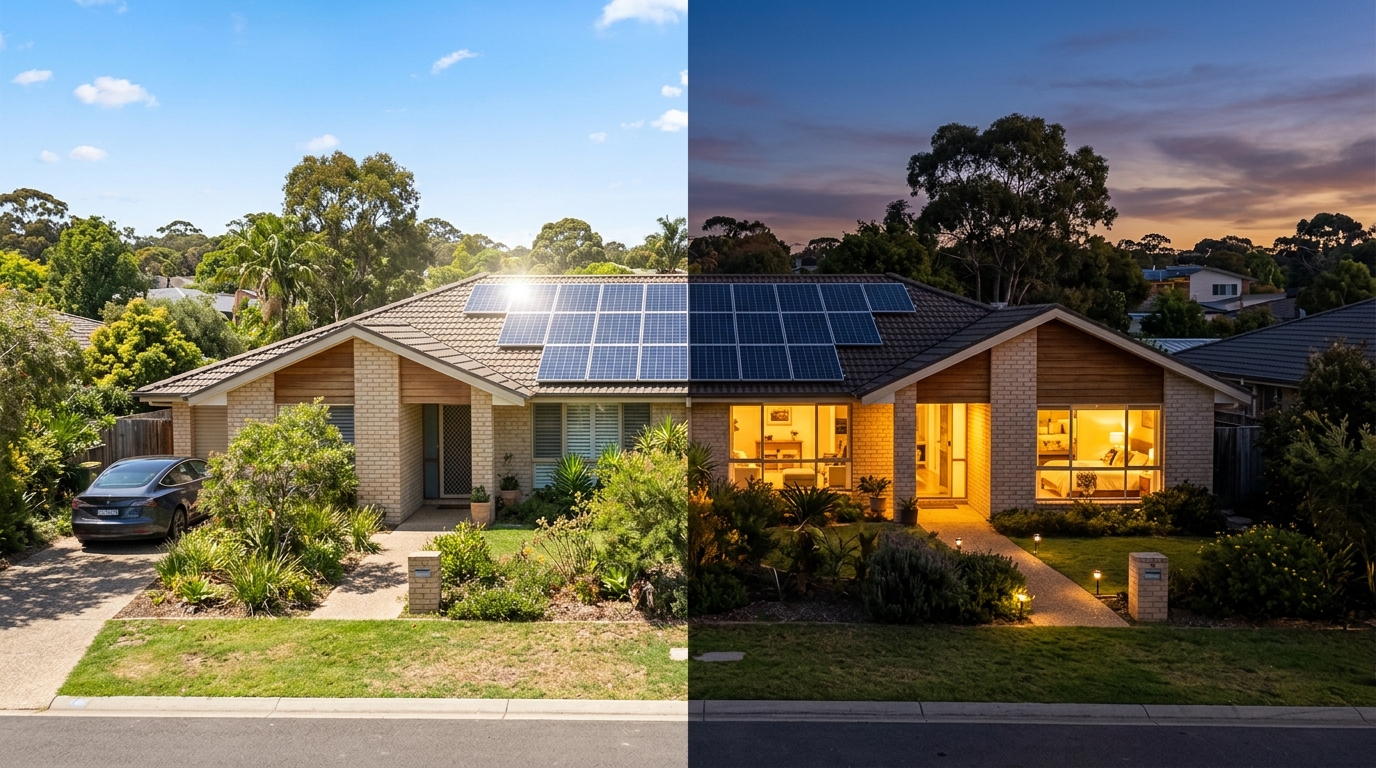
Your solar panels have been generating power all day while you're at work. Then the sun goes down, and you switch straight back to buying power from the grid at peak rates. That's the gap a solar battery fills – and in 2026, it's never been cheaper or more straightforward to close it.
This guide explains the different types of solar batteries available, how they work, and how to make sense of the current rebates so you can work out the best solar battery for your home.
Here’s the simplest way to explain how solar batteries work.
When your solar panels produce more electricity than your home is using at that moment (which happens a lot during the middle of the day), that surplus either gets exported to the grid for a small feed-in credit or stored in a battery.
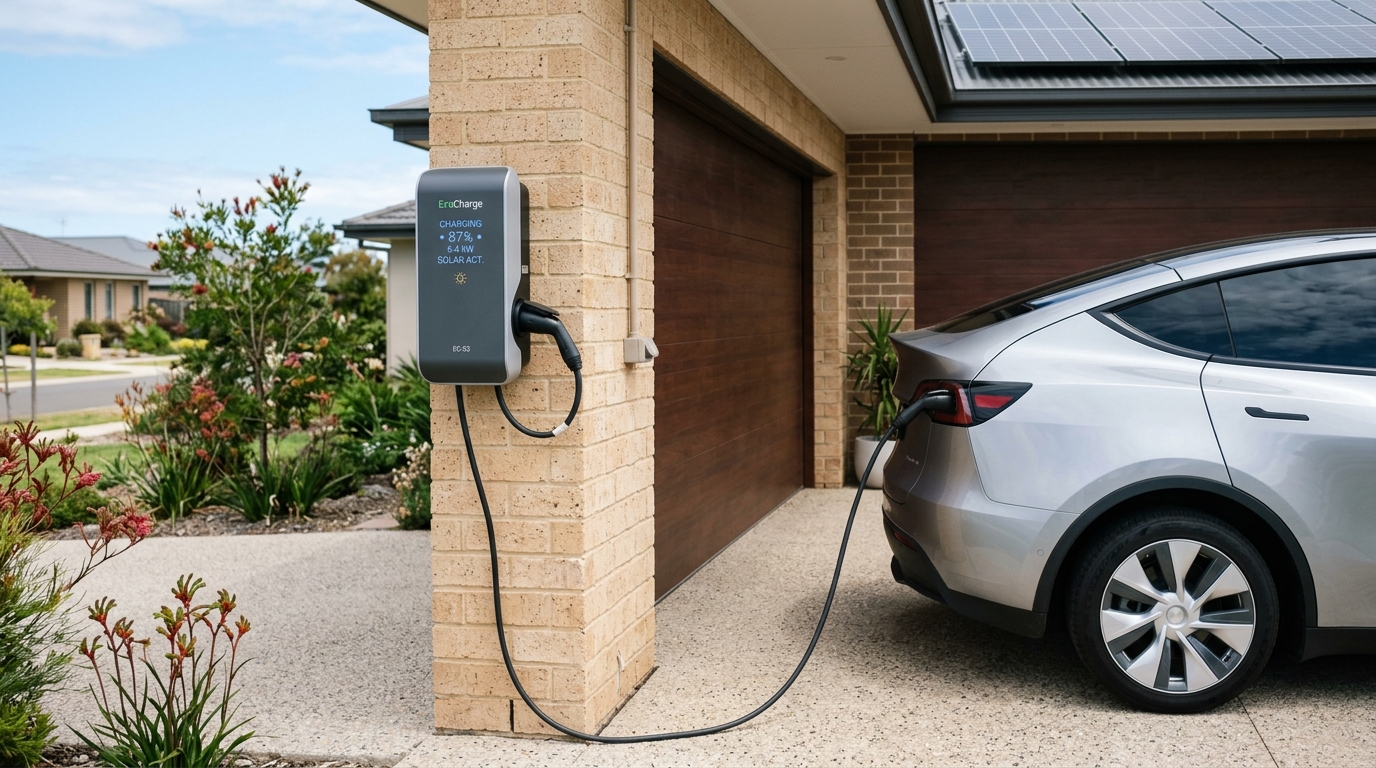
A battery stores that surplus as DC electricity, then converts it back to AC power when your home needs it – after dark, on overcast days, or during a grid outage. The more you can shift your usage away from the grid (especially during peak evening rates), the faster your system pays itself off.
The measure that matters most is round-trip efficiency: how much of the energy you put into the battery you actually get back out. Good batteries sit at 90–95% round-trip efficiency. Anything below 85% is worth querying.
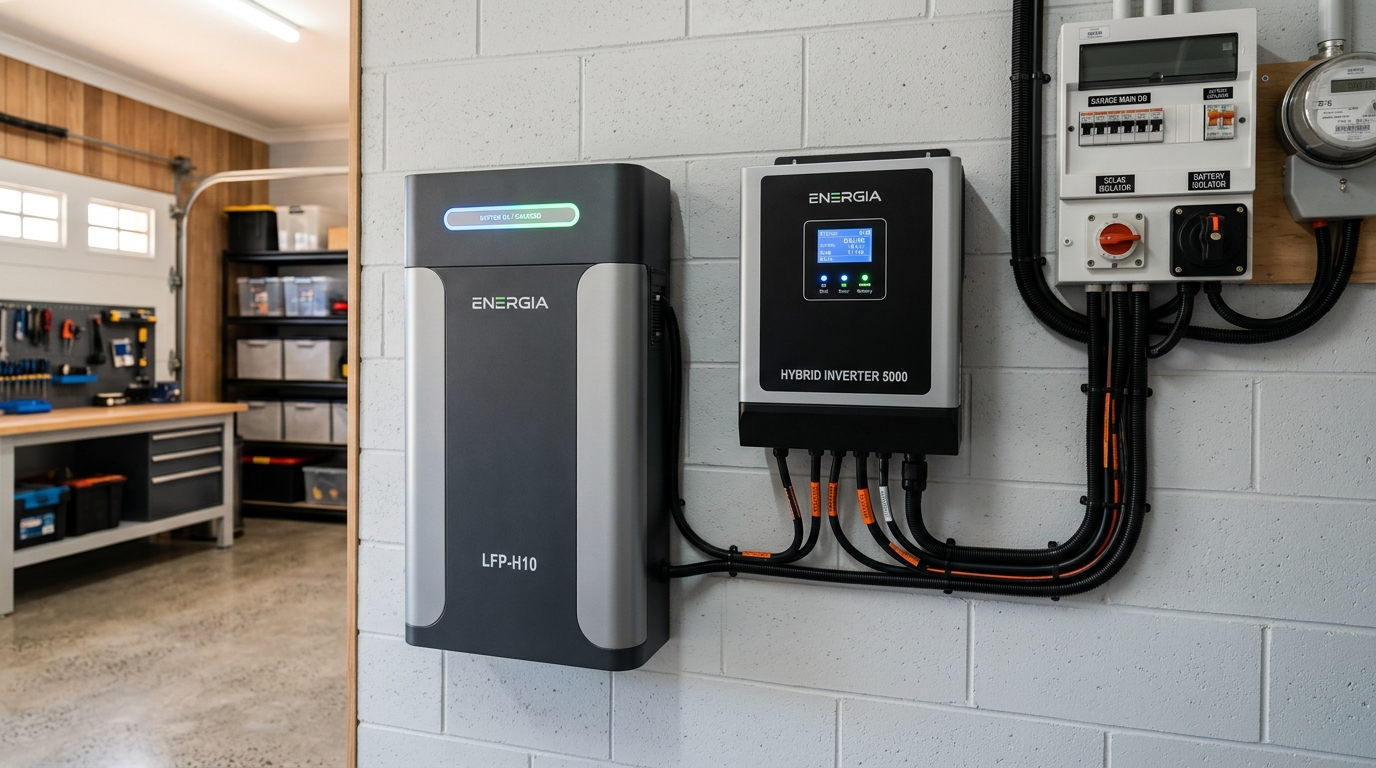
Most residential solar batteries installed in Australia today use lithium-ion chemistry. But within that category, there are meaningful differences worth understanding.
This is the chemistry in batteries like the Sungrow SBR series and BYD Battery-Box. LiFePO4 batteries run cooler, handle more charge and discharge cycles, and carry a lower fire risk than older lithium chemistries. Most LiFePO4 batteries offer a 10–15 year lifespan, and the cycle warranties reflect that – typically 6,000 cycles or more.
For a Newcastle home, this is the chemistry we'd prioritise. It holds up well in warm Australian conditions and doesn't require the same level of thermal management as alternatives.
Higher energy density than LiFePO4, which means a smaller physical footprint for the same capacity. But the trade-off is a higher operating temperature and more sensitivity to charge management. Some older LG and early-generation systems used NMC. It's largely been superseded in the residential market by LiFePO4.
Still found in off-grid and rural setups, but not in modern grid-connected residential installs. Much shorter lifespan, lower depth of discharge, and higher maintenance requirements. If someone quotes you a lead-acid battery for a Newcastle home system, that's a red flag.
There's no shortage of brands now. Australian homeowners have access to a growing range of batteries with different chemistries, warranties, and pricing.
But rather than chasing a single "best" solar battery for your home, here's a solar battery comparison that actually differentiates a good battery from a mediocre one.
The number on the label isn't what you get. A battery marketed as 10kWh might only have 9kWh of usable capacity after accounting for the buffer that protects the battery from deep discharge. Always compare usable capacity figures, not nominal ones.
Most quality residential batteries carry a 6,000–10,000 cycle warranty, which covers roughly 15–25 years of daily charging and discharging. Some manufacturers express this as a throughput figure: the total amount of energy the battery is warranted to deliver over its life. Higher throughput = more confidence in long-term performance.
A battery with 100% depth of discharge (DoD) lets you use all of its usable capacity. Some older systems only allowed 80–90% DoD, which reduces what you can actually draw on each evening.
Not every battery automatically keeps the lights on during a grid outage. Those that do are described as having backup capability or islanding mode. It's worth confirming this with your installer, especially if power reliability matters to you, and in the Hunter region, it often does during storm season.
Some batteries are designed to work with specific inverter brands (or include their own). A mismatched battery and inverter combination can reduce efficiency, create monitoring headaches, or void warranties. This is one reason to use an installer who handles the whole system, not just the panels.
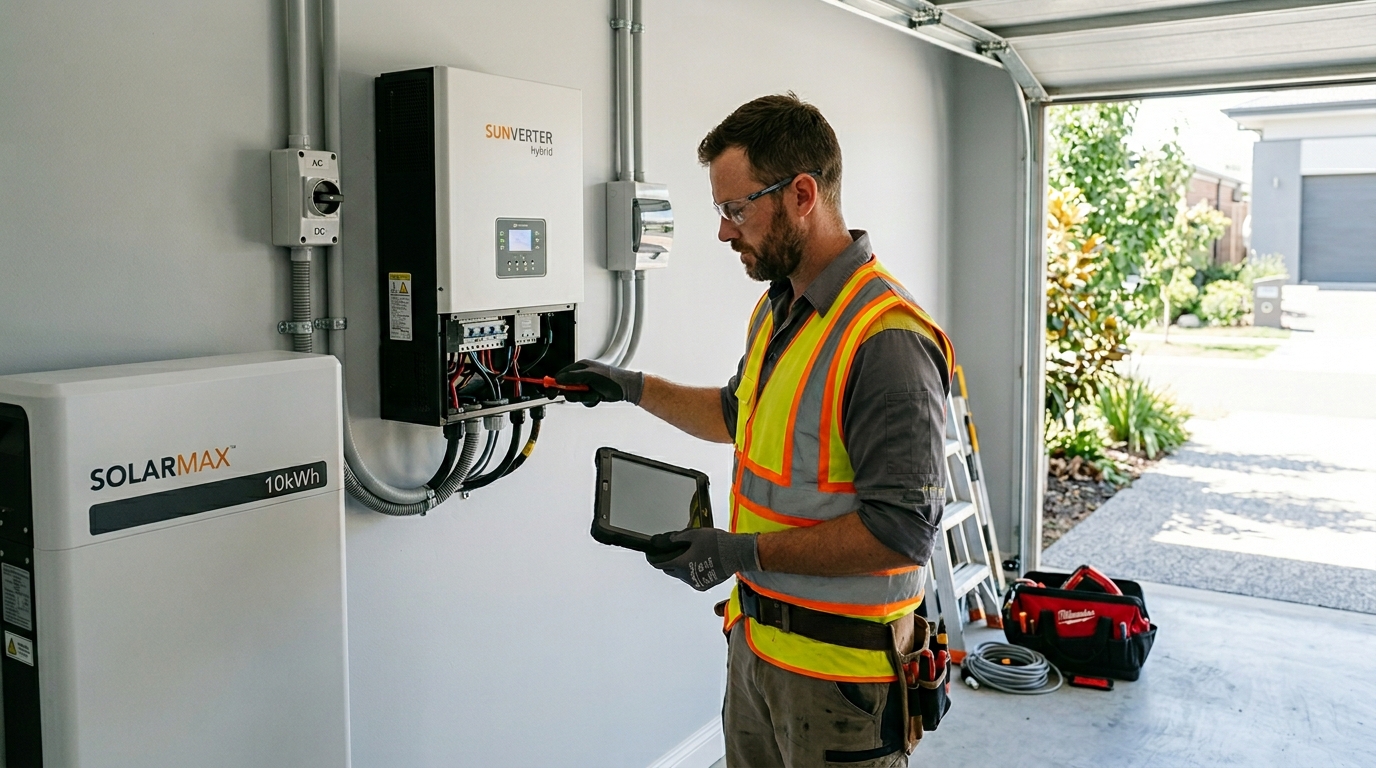
For the average Australian family, a 10kWh battery is the most commonly recommended size in 2026, offering the best balance of storage capacity, backup potential, and return on investment.
But "average" covers a lot of ground. Here's a simpler way to think about it: your battery only needs to cover your evening and overnight electricity use, not your whole day. If you can see from your electricity bill that you're using around 8–10kWh after the sun goes down, a 10kWh battery gets you to near-full self-sufficiency most nights.
A few things that might push you toward a larger battery:
Homes with lower usage, for example, retirees, couples without kids at home, or smaller properties, often find that a 5–6.6kWh battery covers their needs without over-investing.
The best way to size it properly is to look at your actual usage data, not a rule of thumb. When we do a free site assessment, we pull 12 months of usage data to size the battery around how your household actually operates, not how an average household behaves.
The honest answer is: it depends on your usage, but the case has strengthened considerably in 2026.
The federal Cheaper Home Batteries Program currently reduces the cost of an eligible home battery by around 30%, applied at the point of sale (you don't apply separately; your installer handles it). For a 10kWh battery at current settings, that's roughly $3,000 in federal support. That brings a quality 10kWh system into a range where payback periods for most Newcastle households become genuinely realistic.
There's also a time sensitivity here worth noting. From 1 May 2026, the rebate enters a tiered structure. Smaller batteries keep stronger support, while larger systems lose more of the per-kWh incentive. If you're considering a larger battery (13kWh+), the financial case for acting before that date is real.
In Newcastle specifically, the economics stack up well for a few reasons:
A battery on its own isn't for everyone. If you have very low evening usage, a small system, or shading issues that reduce daytime generation, the payback period stretches out. Our team will tell you that directly rather than recommend a battery that doesn't make sense for your situation.
Many Newcastle homeowners already have panels installed and are now asking whether they can add a battery. In most cases, yes, but the path depends on your existing setup.
If you have a standard string inverter (the most common type installed before 2020), you'll likely need a hybrid inverter installed alongside or in place of the existing one to connect a battery. This adds cost, but it's usually still worthwhile when weighed against current rebate levels.
If you have a newer hybrid-ready inverter, adding a compatible battery is typically more straightforward.
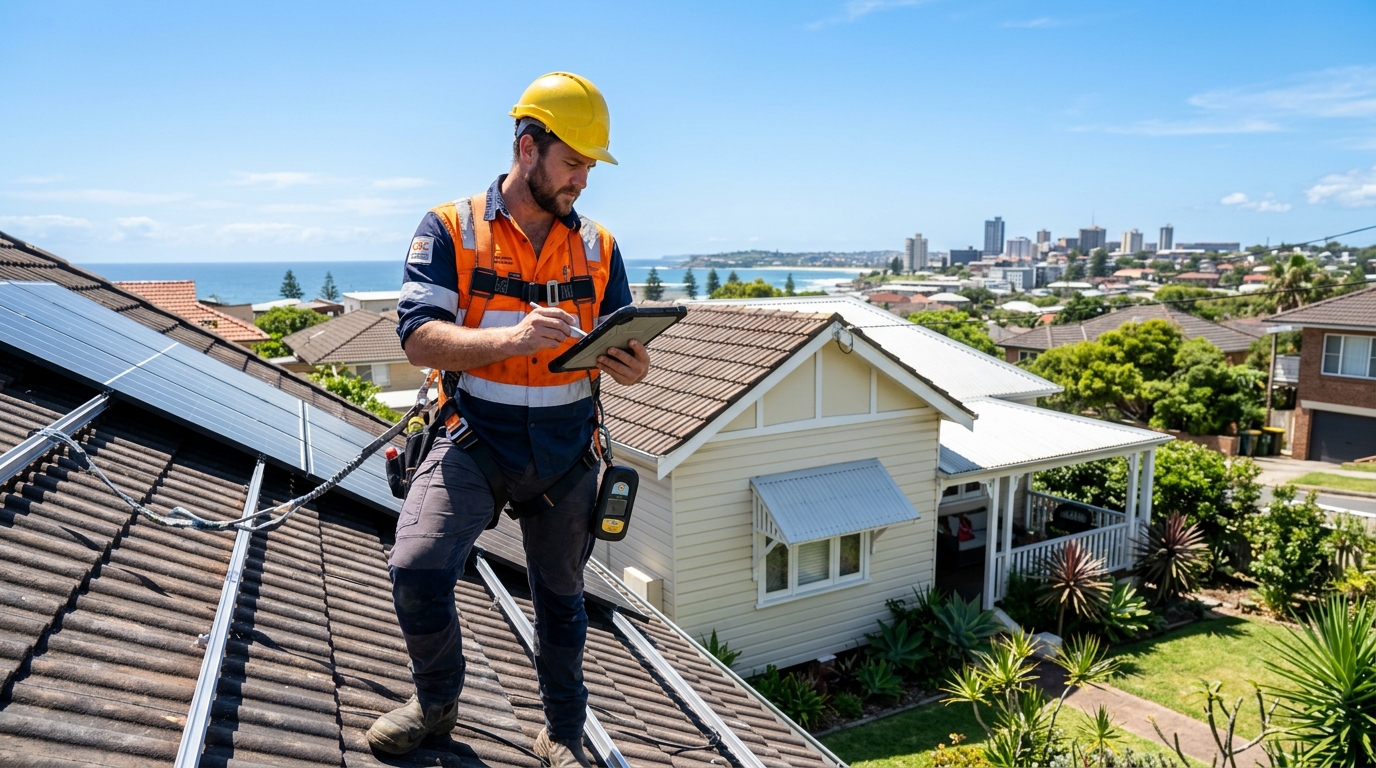
The key is having someone who understands both the electrical and energy management sides to assess your system properly. Check out our solar panel process page for an overview of how we approach both new installs and battery add-ons – the same attention to detail applies either way.
A well-configured solar and battery system follows a simple priority order:
This hierarchy maximises self-consumption, which is what matters most as feed-in tariff rates continue to fall across NSW. The higher your self-consumption, the less you're buying from the grid, and the faster your solar and battery installation pays off.
At Sine Wave Solar, we only specify batteries that carry a 6,000–10,000 cycle warranty and come from manufacturers with a verified Australian presence. That matters because a 25-year battery warranty is only as good as the company standing behind it in 2040.
We work with LiFePO4 systems that we've seen perform reliably in Newcastle's climate, including through the humidity of Hunter summers and the cooler winter nights, which affect charging behaviour differently than in southern states.
Every battery we install is set up with remote monitoring, so you can track your daily generation, storage, and usage from your phone. And because our team handles installs in-house, you're dealing with the same people who designed your system if anything ever needs attention.
If you're weighing up solar finance solutions to spread the cost, we can walk through options that let you install from $0 upfront and offset repayments with immediate bill savings.
The best starting point for residential solar in Newcastle is to take a proper look at your actual usage.
Our team visits your property, reviews your electricity data, and gives you a clear picture of what a battery would realistically save you, what size makes sense, and what the full cost looks like after current rebates.


-1.png)