

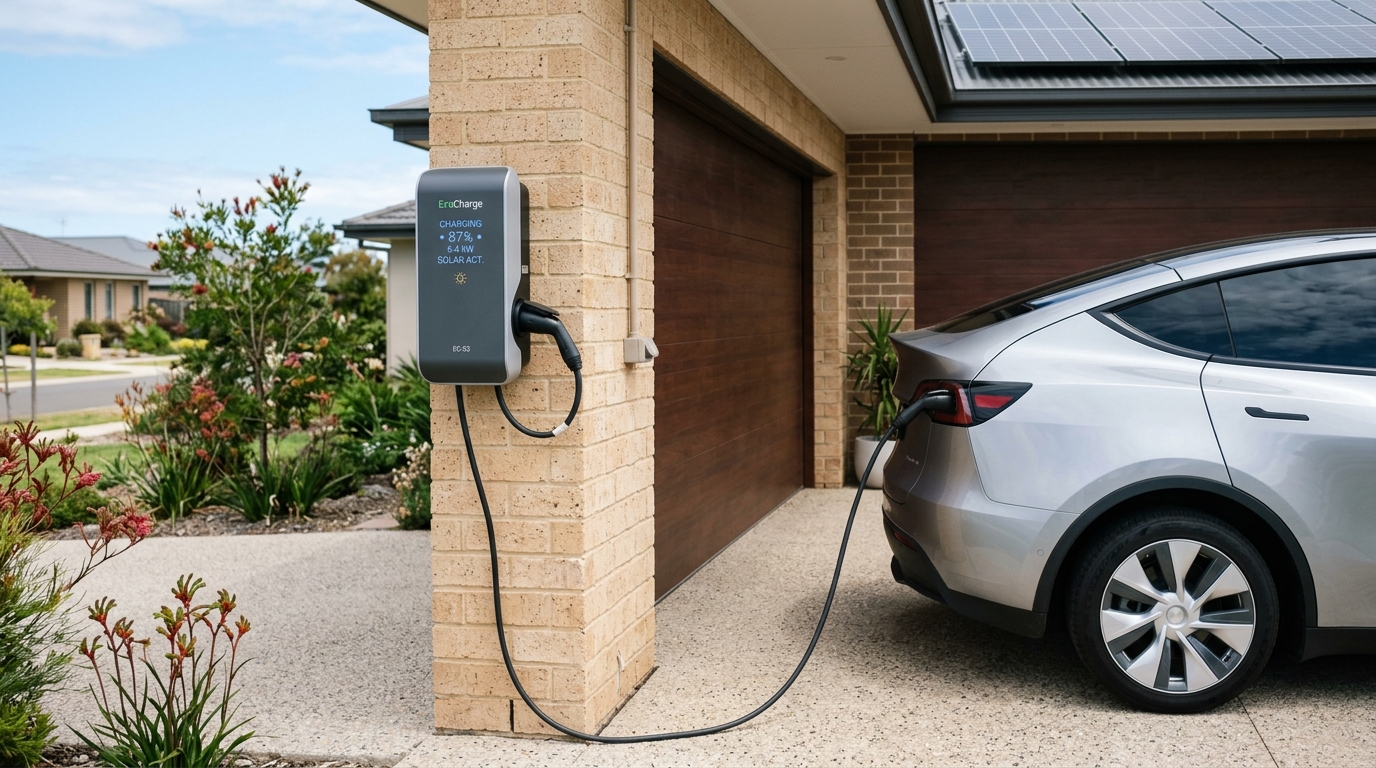
If you've recently picked up an EV or are thinking about getting one, you’re probably already doing the mental maths. Petrol is no longer necessary, but the power bills are about to climb. And somewhere in the back of your mind, you're thinking: could solar panels cover this?
They can. EV charging with solar panels is one of the smartest ways to use your system, and in Newcastle, it stacks up particularly well. With 4.7 peak sun hours per day, your panels are generating meaningful surplus through most of the day.
Right now, that surplus is likely being exported to the grid. But divert it back into your car instead, and you're effectively driving on sunshine at a fraction of what the grid would charge you.
Here's what you actually need to know to make it work.
Yes, EV charging with solar panels does work, and more Australians are doing it than you might expect. According to the EVC EV Ownership Survey 2024, around 80% of Australian home-charging households pair their EV with rooftop solar.. It's an obvious combination once you think about it.
The economics are straightforward. Standard solar systems export surplus power to the grid when the house isn't using it all. In most of Australia, that export earns around 5–10 cents per kilowatt-hour. Charging your car from that surplus instead uses that energy at whatever your grid import rate would have been – often 30–40 cents per kWh saved.
That's a significant gap. Every kilowatt-hour you push into your EV from your own roof, rather than buying from the grid, is money you keep. Over a year of daily commuting, it adds up fast.
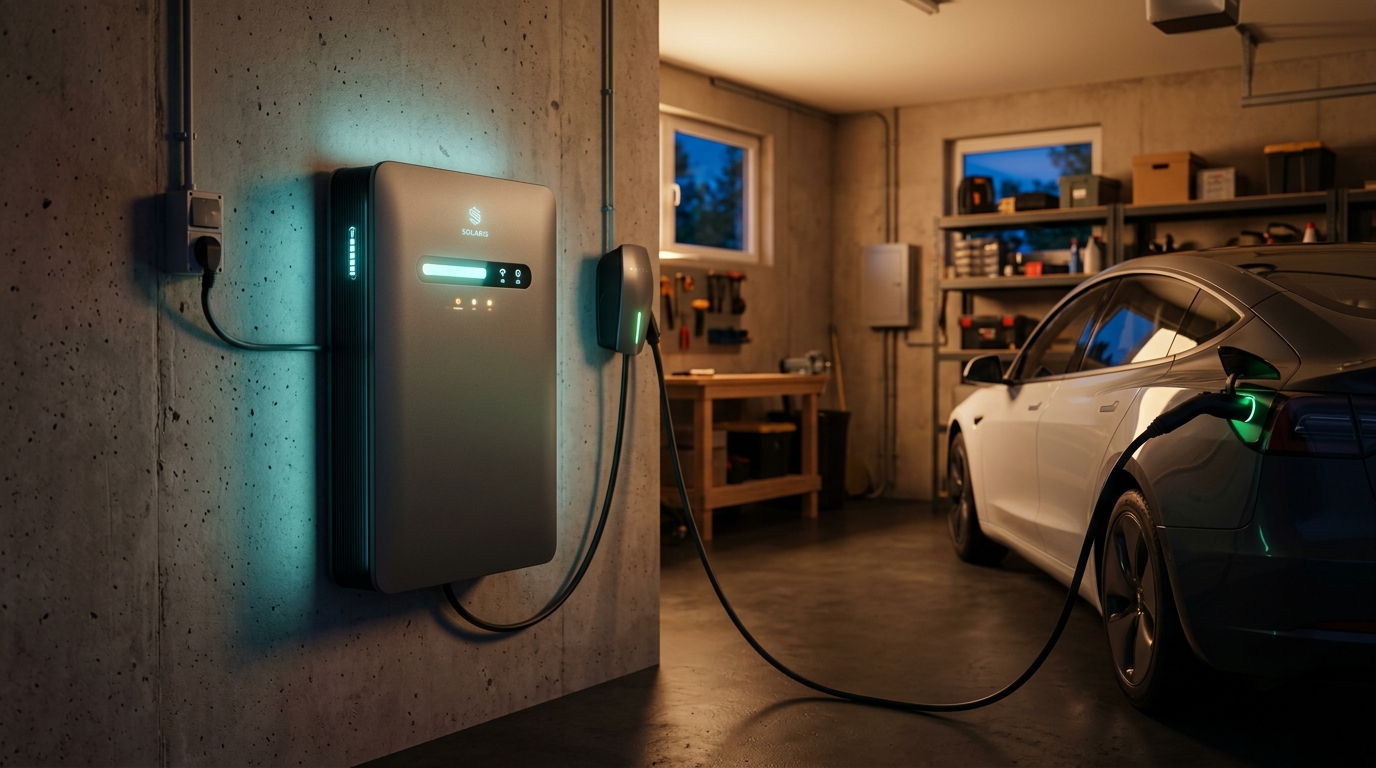
This is the question that trips most people up, and the honest answer is: it depends on how you drive and when you charge.
The starting point is understanding how much energy your EV actually uses. According to the Australian Bureau of Statistics, the average Australian drives 36.4 kilometres a day. The average EV consumes up to 20 kWh per 100 kilometres, which equates to roughly 7 kWh of charge required to travel that 36.4 kilometres per day.
For home solar power in Newcastle, each kilowatt of panels installed generates roughly 4.7 kWh per day on average. In theory, a modest 2kW addition to your system could cover average daily driving. But theory and reality are different things.
If you're also running a household with ducted air conditioning in summer and hot water, you need the full picture.
An electric vehicle can increase your household electricity use by 2,000–3,500 kWh per year, depending on driving habits – a 30–60% increase in total household consumption. That means a 6.6kW system that was working well before you bought an EV might start feeling undersized.
For Newcastle homes wanting to use solar power for electric vehicles:
Our solar and battery installation page walks through the system sizes we commonly recommend across different household profiles.
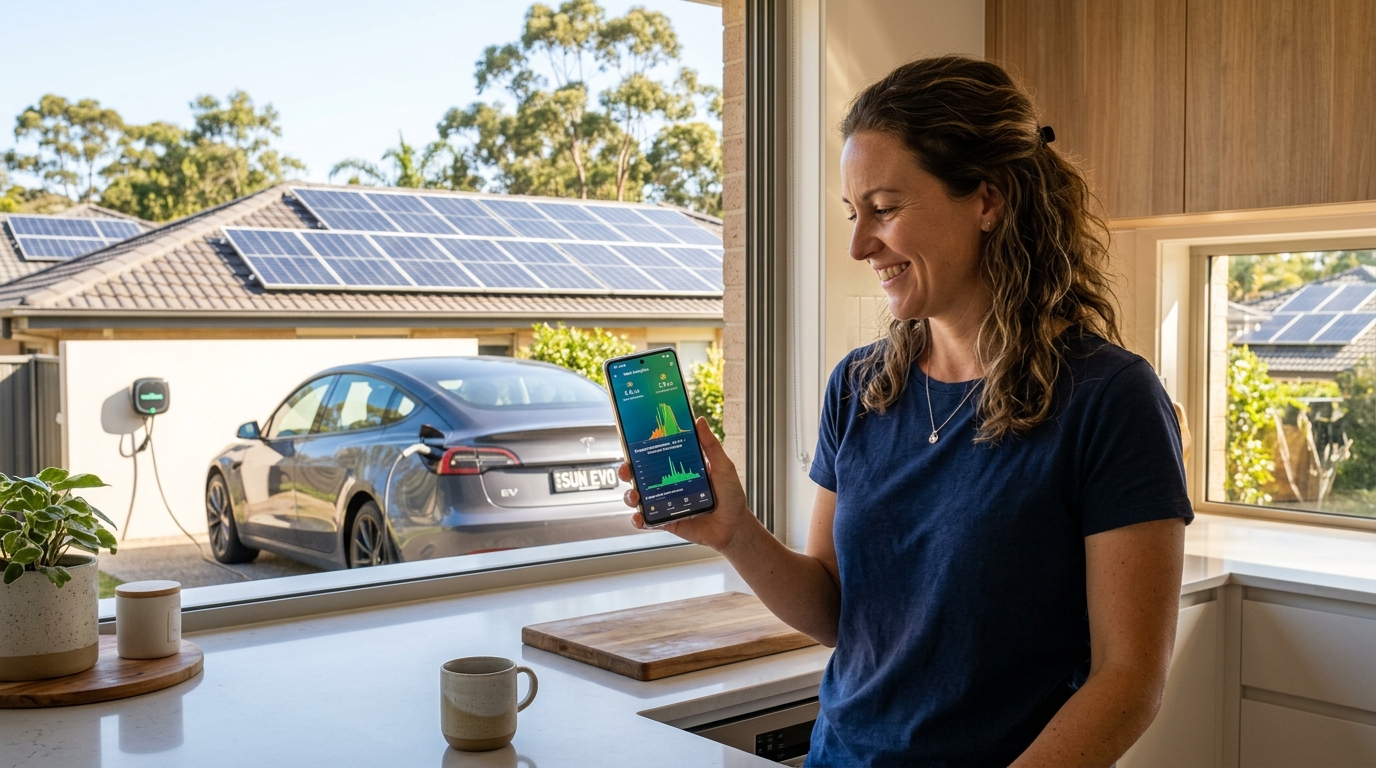
Getting the right system isn't just about kilowatts. The best solar setup for electric vehicle charging in Australia involves appropriately sized panels, a compatible inverter, and a smart EV charger, all working together.
A standard EV charger just draws power without caring whether it comes from your panels or the grid. A smart charger with solar diversion is different. It measures your surplus solar output and automatically routes it into your car rather than exporting it at a low feed-in rate. You plug in, and it handles the rest.
Panel efficiency matters too. For a system covering home loads, EV charging, and potentially a battery, higher-efficiency monocrystalline panels mean more energy from the same roof space. Our guide to the different types of solar panels covers what to look for.
If you can plug in during the day while your panels are producing, a battery isn't strictly necessary. But most people get home after dark, which is exactly when your panels aren't generating anything.
A battery changes that. Your stored solar carries through to the evening, so you're charging from your own generation rather than the grid. If you want a battery to cover both household use and EV charging overnight, you're generally looking at 13kWh or above. Our solar battery comparison covers the options in detail.
On cost: the federal Cheaper Home Batteries Program currently takes around 30% off an eligible battery. See our solar battery NSW rebate page for current details. The rebate on solar panels in NSW is also still delivering $2,000–$4,000 off system costs through the STC program.
It's possible, and some Newcastle homeowners are heading that way – particularly those with higher energy independence goals or rural properties. But going fully off-grid with an EV adds real complexity: you need enough generation and storage to cover both household loads and vehicle charging through extended overcast periods, not just sunny days.
If that's something you're considering, our blog on off-grid solar covers how we approach those systems for the Hunter region.
A few things worth understanding before you commit:
For a full picture of what's involved, our Newcastle solar installation requirements explained page covers the grid connection process, approvals, and what to expect on installation day.
Here's a simple way to think about it. NSW grid electricity currently runs at roughly $0.35–$0.40 per kWh for most households. If your EV needs 7 kWh per day for an average commute, and you're buying all of that from the grid, you're spending around $900–$1,000 per year just to charge your car.
Shift most of that to surplus solar, and the effective cost per kilometre drops dramatically – close to zero on days when your panels are producing well.
That's why we look at the solar panel cost in Newcastle conversation holistically – panels, battery, EV charger, and rebates all together – rather than treating each as a separate decision.
EV charging with solar panels works well in Newcastle, but the right system size depends on your driving habits, your current setup, and how much of your charging you want to come from your own roof.
Our team visits your property, reviews your actual usage, and gives you a clear picture of what a properly sized system would cover. We install panels, batteries, and EV chargers in-house – no subcontractors, no hand-offs.


-1.png)