


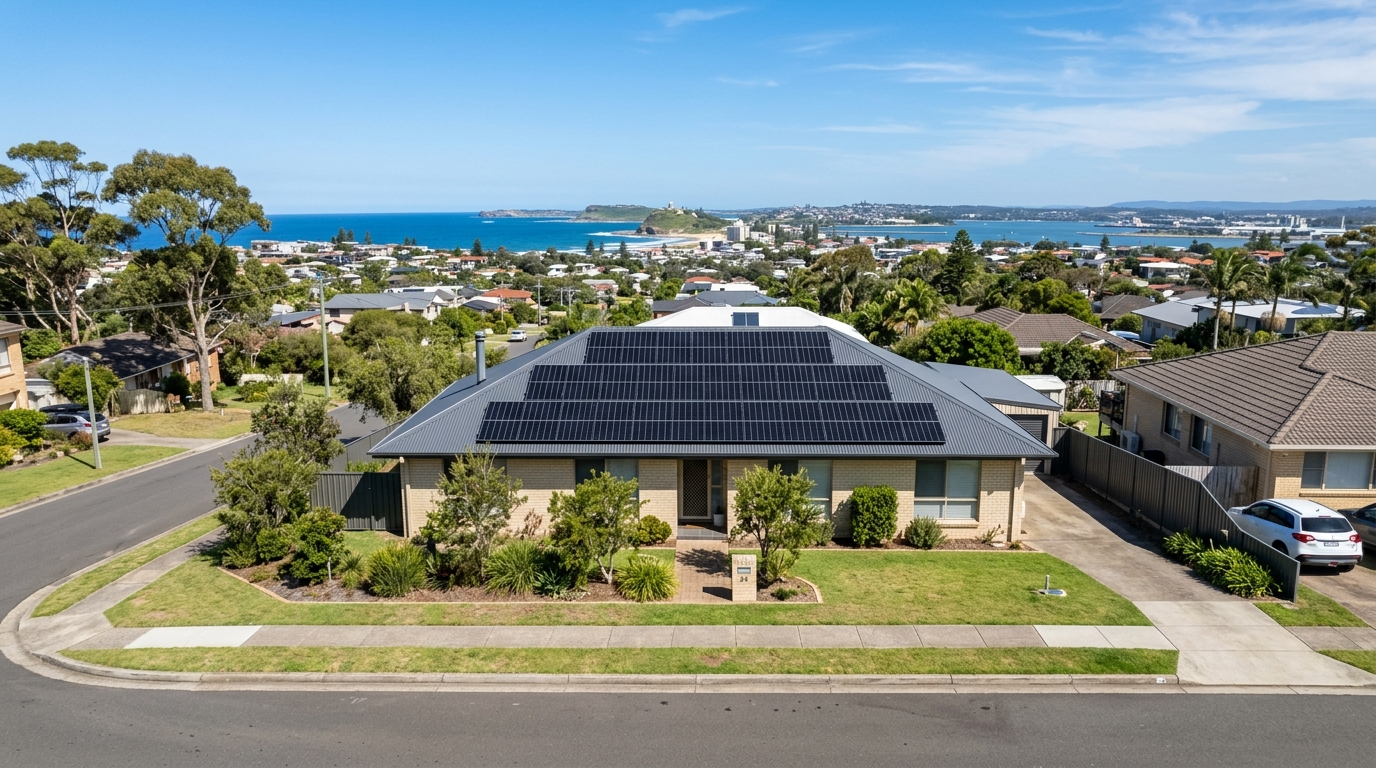
If you've started looking into solar for your home, you've probably hit a wall of technical terms pretty fast. Monocrystalline. Polycrystalline. Thin-film. It sounds complicated, but the difference between the types of solar panels is pretty straightforward once you strip away the jargon.
By understanding these terms, you’ll be able to make a smarter decision for your home, your roof, and your budget. Here's everything you need to know.
Quick Answer: Which Type of Solar Panel is Best?
- Monocrystalline panels are the clear frontrunner for most Australian homes. They’re more efficient, have a sleeker look, and have better long-term performance.
- Polycrystalline panels used to be the budget option, but they've largely disappeared from the mainstream residential market as mono prices have dropped.
- Thin-film panels are rarely used on home rooftops; they're mostly a commercial and industrial technology.
- For a Newcastle home with limited roof space and good sun hours, monocrystalline is almost always the right call.
- Check out our solar installation process for homes to see exactly what happens from first visit to grid connection.

The Three Main Types of Solar Panels
Whether made from monocrystalline, polycrystalline, or thin film, these different types of solar panels each capture sunlight and convert it into electricity. But the way they do that – the material inside the panel, how it's made, and how efficiently it works – differs depending on the type.
Monocrystalline Solar Panels
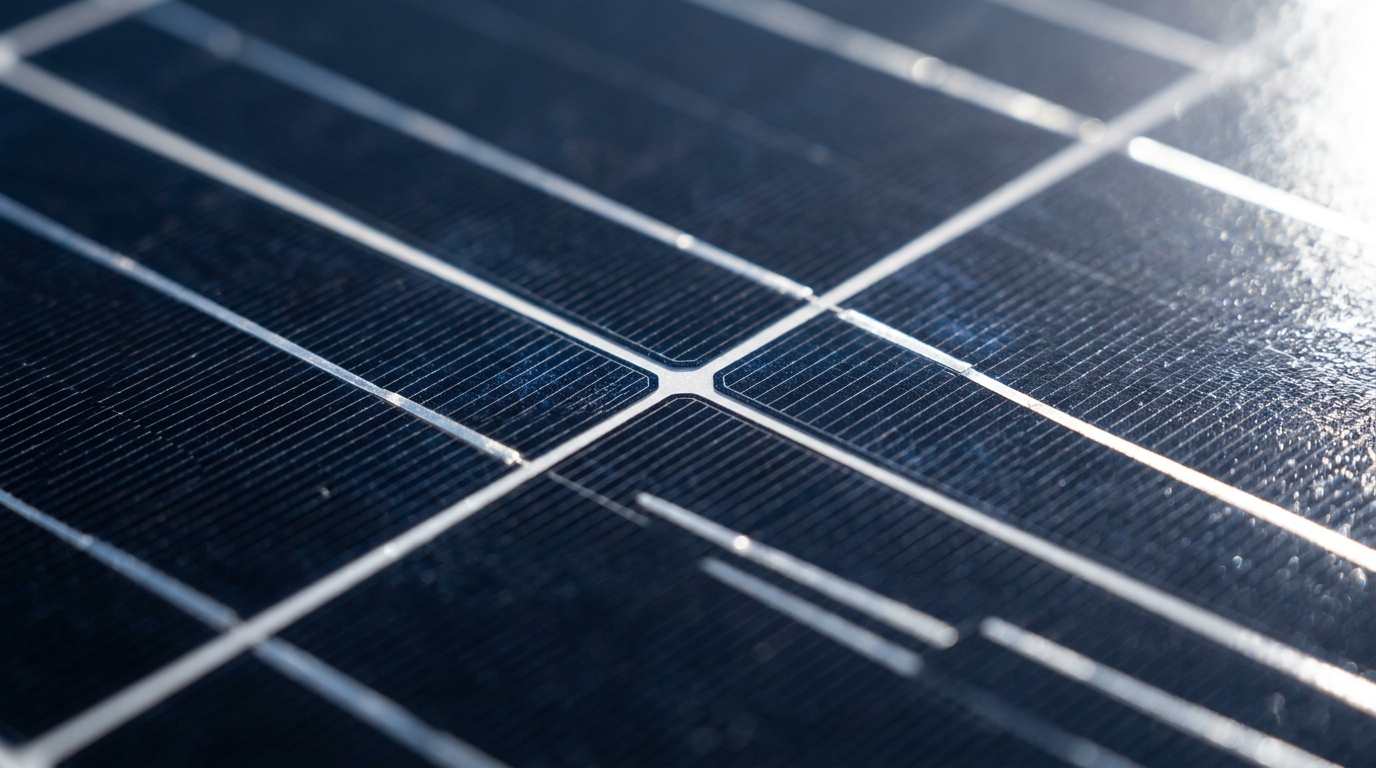
Monocrystalline panels are made from a single, continuous crystal of silicon. During manufacturing, a seed crystal is placed into molten silicon and slowly drawn out to form one large cylindrical ingot. That ingot is then sliced into thin wafers, which become the individual solar cells inside the panel.
Because each cell comes from a single, uninterrupted crystal structure, electrons can move through it more freely. That's the key reason monocrystalline panels are the most efficient solar panels available for homes. In 2025 and 2026, good quality monocrystalline panels hit 20% efficiency and above, with the best residential panels approaching 24%.
You'll recognise them by their dark black or dark blue colour and clean, consistent appearance. Aesthetically, they tend to sit well on most rooftops.
Polycrystalline Solar Panels
Polycrystalline panels use the same raw material (silicon), but the manufacturing process is simpler. Instead of carefully growing a single crystal, manufacturers melt multiple silicon fragments together and pour the mixture into square moulds. When it cools and solidifies, multiple crystals form throughout the material. The resulting wafers are cut from this mixed-crystal block.
The result? A panel that's slightly less expensive to make but also slightly less efficient, typically falling within the 14% to 17% efficiency range. Visually, they have a speckled, lighter blue appearance rather than the uniform look of monocrystalline.
Here's the practical reality in 2026: polycrystalline panels have largely dropped out of the mainstream residential market because the price gap between mono and poly has significantly shrunk. Paying a little more for monocrystalline now simply makes more sense for most homeowners. If you're speaking to an installer still recommending polycrystalline for a home rooftop, it's worth asking why.
Thin-Film Solar Panels
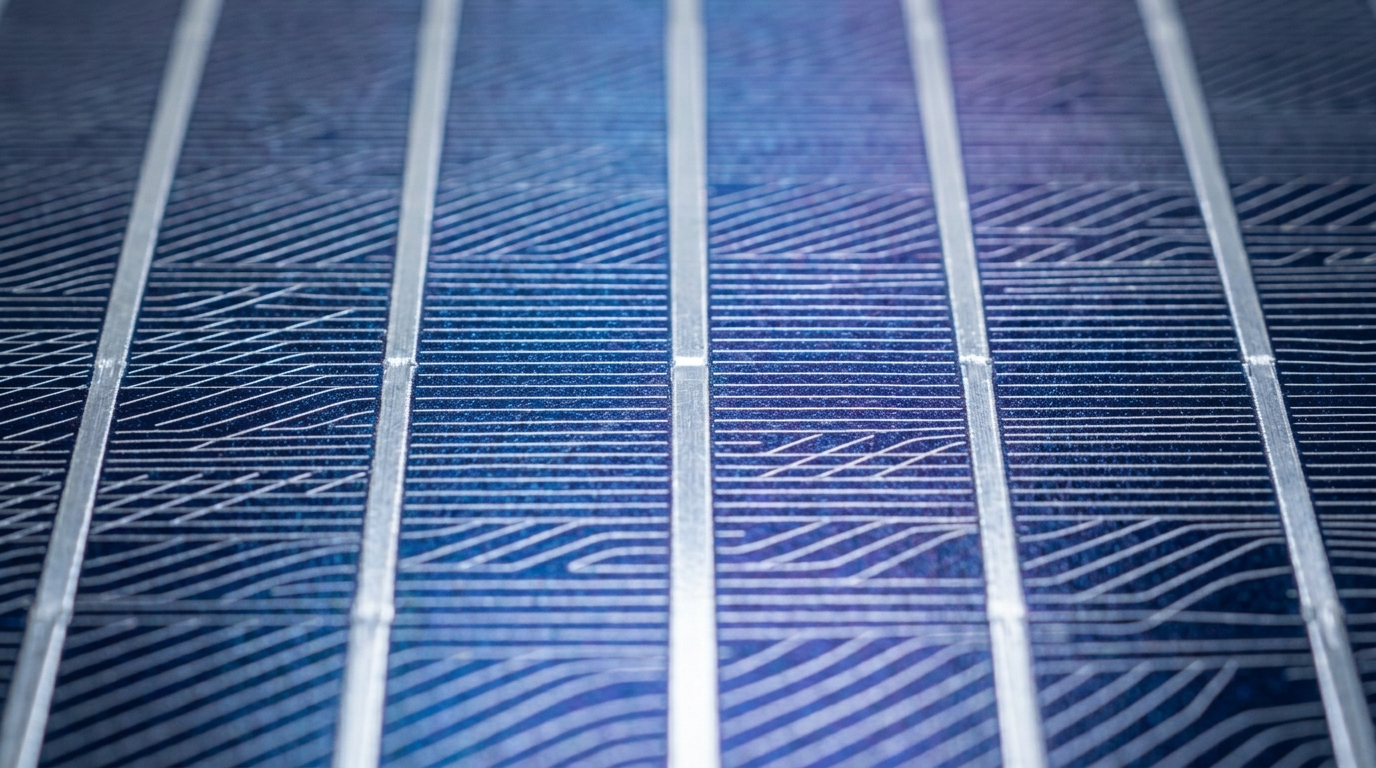
Thin-film is a different technology altogether. Rather than silicon wafers, thin-film panels are made by depositing an ultra-thin layer of photovoltaic material, like cadmium telluride (CdTe) or copper indium gallium selenide (CIGS), directly onto a surface, such as glass.
The upside: they're lightweight, sometimes flexible, and generally cheaper to produce. The downside: their average efficiency sits around 11%, with commercially available panels generally reaching 10–13% – well below what either crystalline panel type can deliver. That means you'd need significantly more roof space to generate the same amount of power.
Thin-film panels don't see much use in residential installs because they're much less efficient than monocrystalline or polycrystalline panels. With roof space at a premium, residential customers go with crystalline silicon panels to maximise production from the space available.
You're most likely to encounter thin-film in large-scale commercial or utility solar installations, or in flexible portable panels for caravans and boats.
Monocrystalline vs Polycrystalline vs Thin-Film: Side-by-Side
Why Efficiency Matters So Much for Homes in Newcastle, NSW
Efficiency isn't just a spec to compare on paper. For a home in Newcastle, it has real, practical consequences.
Newcastle sits in STC Zone 3, with 4.7 peak sun hours per day. That's already a strong solar climate. But most residential rooftops have a finite amount of usable space – especially once you factor in shading from nearby trees, skylights, roof angles, and the orientation of different roof faces.
Higher-efficiency panels mean you generate more power from the same amount of roof space. A high-quality monocrystalline panel rated at 22% efficiency produces noticeably more power per square metre than a panel sitting at 18%. This matters a lot if your roof isn't huge, or if you want to maximise your return from a battery system.
It also matters for degradation. Monocrystalline panels typically see 0.3–0.5% annual performance loss, while polycrystalline panels show a 0.79–1.67% annual decline. Over 25 years, that difference adds up significantly in the total energy your system produces.
What About New Cell Technologies? (TOPCon, HJT, PERC)
If you've been doing some research, you've probably also come across terms like PERC, TOPCon, and HJT. These aren't separate types of solar panels; they're different cell technologies used within monocrystalline panels to push their performance further.
Here's a quick breakdown:
- PERC (Passivated Emitter and Rear Cell): Adds a reflective layer to the back of the cell so that light passing through gets a second chance to be absorbed. A modest but meaningful efficiency boost over standard mono cells.
- TOPCon (Tunnel Oxide Passivated Contact): A more advanced N-type cell technology that reduces energy losses at the cell surface. Newer TOPCon and heterojunction technologies are pushing mono panels past the 22% mark at price points that work for everyday rooftop systems.
- HJT (Heterojunction): Combines monocrystalline silicon with thin amorphous silicon layers, achieving some of the lowest temperature coefficients available. That means they lose less output on hot days – an important consideration for Australian summers.
For most homeowners, the takeaway is simple: when your installer specifies Tier 1 monocrystalline panels with modern cell technology, you're getting the best of what the industry currently offers.
Most Efficient Solar Panels for Homes: What to Actually Look For
Shopping for the most efficient solar panels for your home doesn't just mean chasing the highest efficiency number on a spec sheet. A few other things matter just as much:
Warranty terms
A 25-year product warranty is the baseline for quality panels. Some premium brands now offer 30–40 years. Check both the product warranty and the separate performance warranty, which guarantees a minimum output level over time.
Temperature coefficient
This tells you how much output the panel loses for every degree above 25°C. Monocrystalline panels have an average temperature coefficient of around –0.38%/°C, while HJT cells can be as low as –0.25%/°C – meaning they hold up better on a hot Newcastle summer day.
Manufacturer track record
A panel is only as good as the company behind it. If the manufacturer isn't around in 10 years, your 25-year warranty isn't worth much. Tier 1 status and a verified Australian presence are worth prioritising.
CEC-approved products
The Clean Energy Council maintains an approved product list. Panels on this list have met minimum quality standards and are required for your system to be eligible for STC rebates. If a panel isn't on it, walk away.
At Sine Wave Solar, we only install panels from manufacturers with verified track records in Australian conditions and a 25-year product warranty. Our residential solar installs across Newcastle are specified with those criteria front of mind – because a system you install today needs to still be performing well in 2050.
Thin-Film's Niche: When It Does Make Sense
Thin-film isn't the right choice for most Newcastle homeowners, but it does have its place.
If you're running a large commercial operation with plenty of roof or ground space and less concern about power density, thin-film can be cost-effective at scale. It's also the technology behind flexible solar panels used in caravans, boats, and portable setups, where weight and flexibility matter more than raw efficiency.
For commercial solar in Newcastle with larger footprints, the conversation about technology type is more nuanced – it's worth getting a proper load assessment done before deciding.
So, Which Type of Solar Panel Should You Choose?
For the vast majority of Newcastle homes, the answer is monocrystalline. Increasingly, the question is less about which type and more about which brand and cell technology within the monocrystalline category.
Here's a simple way to think about it:
- Tight roof space or high energy needs? Go for high-efficiency mono panels with TOPCon or HJT cells. You'll get the most from every square metre.
- Larger roof and comfortable budget? Standard Tier 1 monocrystalline PERC panels deliver excellent returns at a lower price point.
- Adding a battery now or later? Either way, a properly sized mono system gives you the strongest generation base to work from. Take a look at our solar battery comparison to see how different storage options pair with modern panels.
- Going off-grid? Efficiency becomes even more important when every kilowatt-hour counts.
What you don't need is a polycrystalline panel in 2026. The economics simply don't justify it anymore.
Ready to Talk Panels for Your Home?
If you want a straight answer about what would work on your specific roof (not a one-size-fits-all package), we're happy to take a look. Our team visits your property, reviews your actual usage, and recommends a system based on what will deliver the best returns for you.
Founder, SAA-accredited installer
Sam has spent over 15 years working as an electrician across Newcastle and the Hunter. He founded Sine Wave Solar to design and install solar and battery systems in-house, from site assessment through to grid connection.


-1.png)