

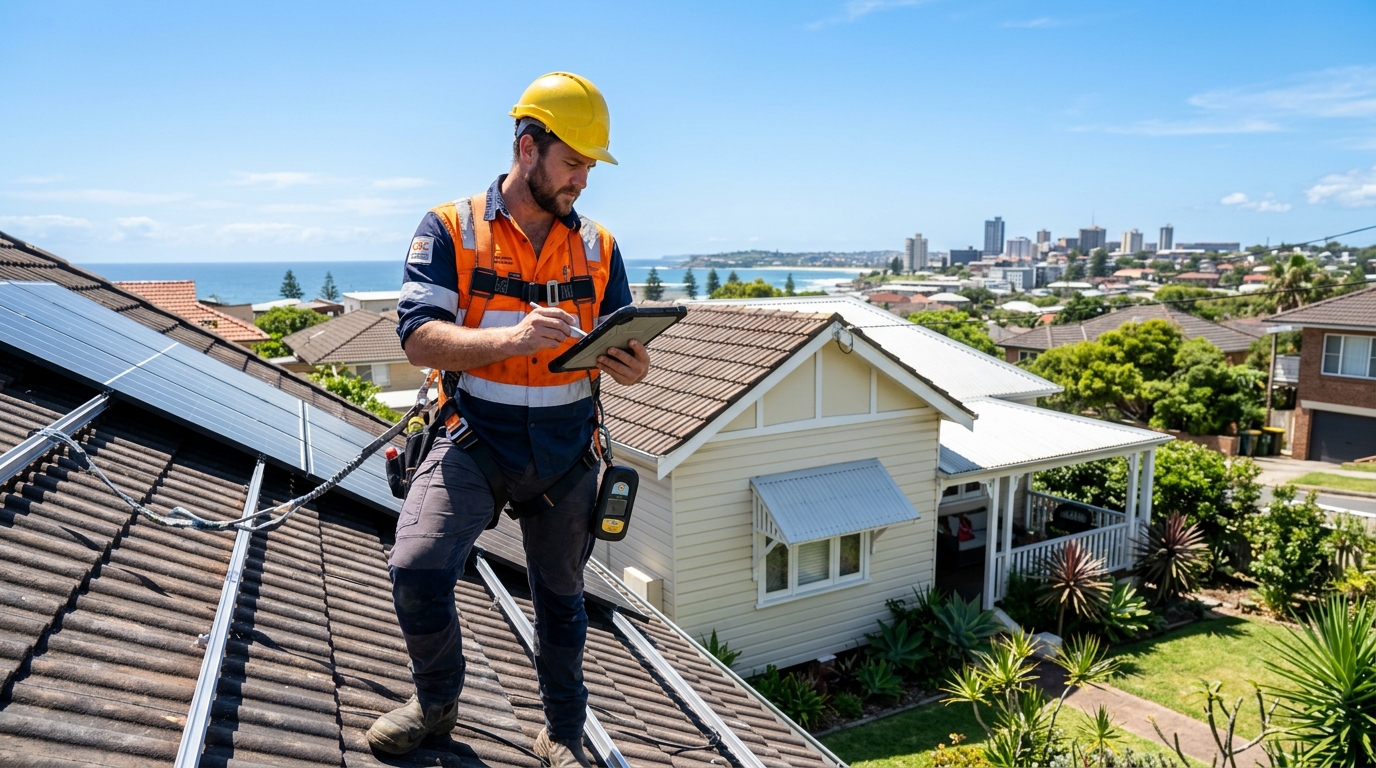
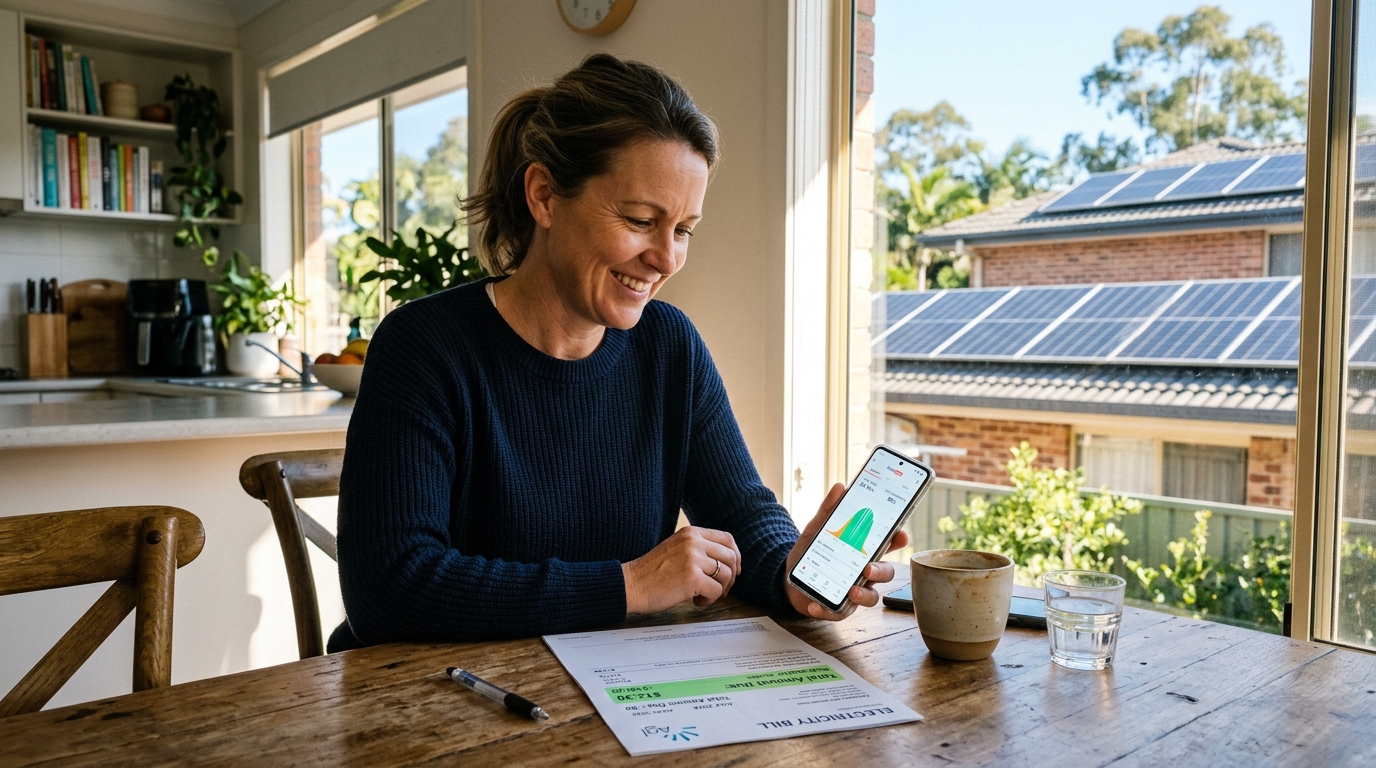
Most people looking into solar in Newcastle have the same starting point: a power bill they're tired of paying. NSW electricity prices have risen more than 20% since 2022, and the average Newcastle household now spends somewhere between $1,800 and $2,600 a year on power. At some point, the maths just becomes hard to ignore.
The good news is that the solar installation process for homes in Australia is more straightforward than most people expect. Newcastle sits in STC Zone 3 with 4.7 peak sun hours per day – one of the stronger solar regions in NSW – and the combination of federal rebates, battery incentives, and competitive system pricing means the economics have never looked better.
This guide walks through everything you need to know: how residential and commercial solar systems work, what the installation process actually involves, what it costs, and what you need to understand before you sign anything.
Before getting into the process, it's worth understanding why Newcastle works so well for solar. The region's sun hours are consistent year-round – not just in summer – which means your system is producing meaningful output through autumn and winter too. On overcast days, panels still generate 20–40% of their peak output.
Newcastle also falls under Ausgrid's distribution network, which has a reasonably well-defined approval pathway for solar connections. That matters practically: it makes the grid connection process more predictable compared to some regional areas.
For homes near the coast or with west-facing roofs, performance is still strong. North-facing is ideal, but east and west orientations both deliver solid returns in Newcastle's climate.
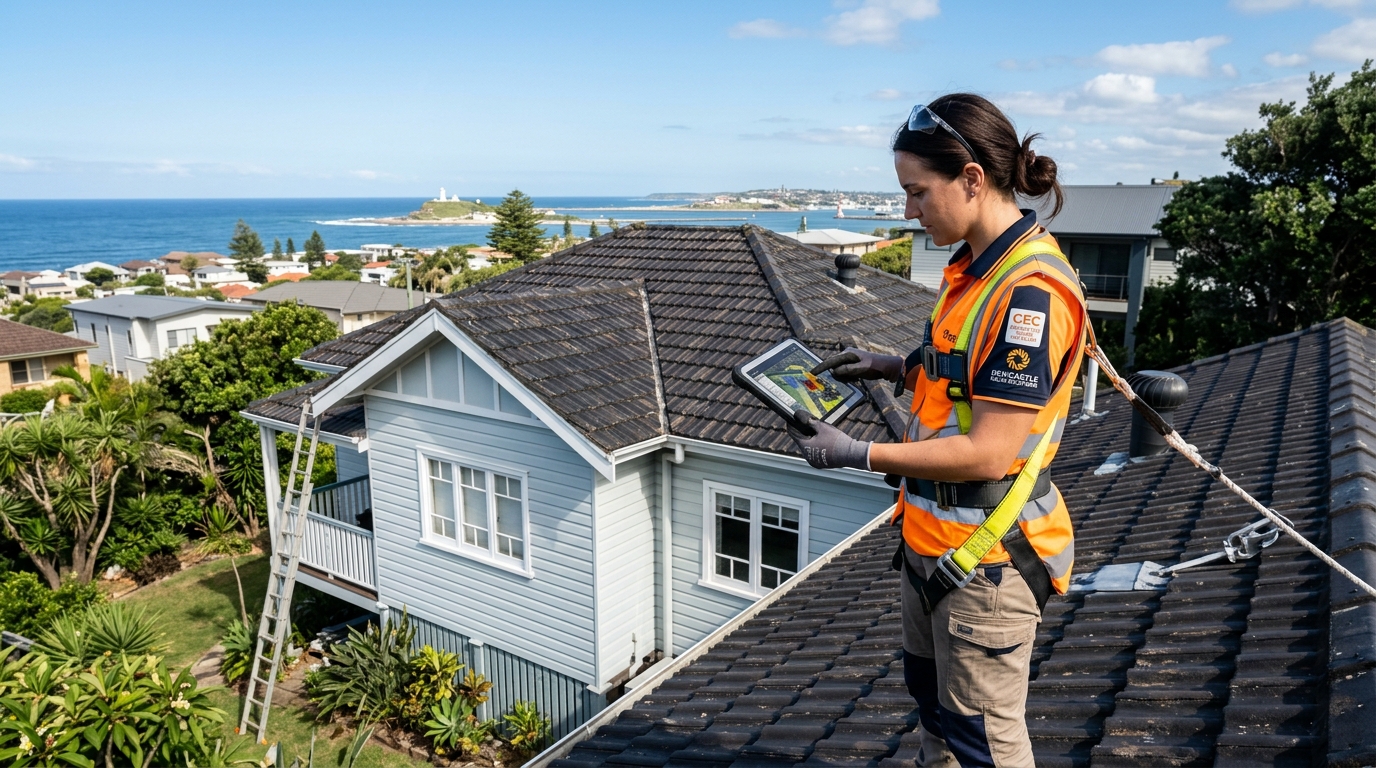
This is what the Newcastle solar installation requirements and process actually look like from your side of the fence.
A proper solar assessment includes:
What comes out of the assessment is a system recommendation based on your actual usage, not a catalogue package.
From the site data, your installer designs a system tailored to your roof, consumption, and budget. The quote should be itemised (panels, inverter, mounting, installation, and any additional electrical work) and clearly show the STC rebate already applied to the price.
If you want battery storage, this is also where that decision gets made. Adding a battery from the start is generally more cost-effective than retrofitting one later, since the hybrid inverter is included upfront.
For systems up to 10kW, your installer lodges a connection application with Ausgrid before installation begins. Systems above 10kW require pre-approval from Ausgrid before any physical work starts – a step that can take a few weeks, so factor that into your timeline.
Ausgrid requires all new solar systems to comply with AS/NZS 4777.2:2020 inverter standards. And from mid-2026, new systems in NSW are also required to be "backstop enabled", meaning the inverter can respond to emergency grid management signals.
This is handled at the inverter level. Your solar power installer in Newcastle should specify compliant equipment as standard and be across all of these requirements.
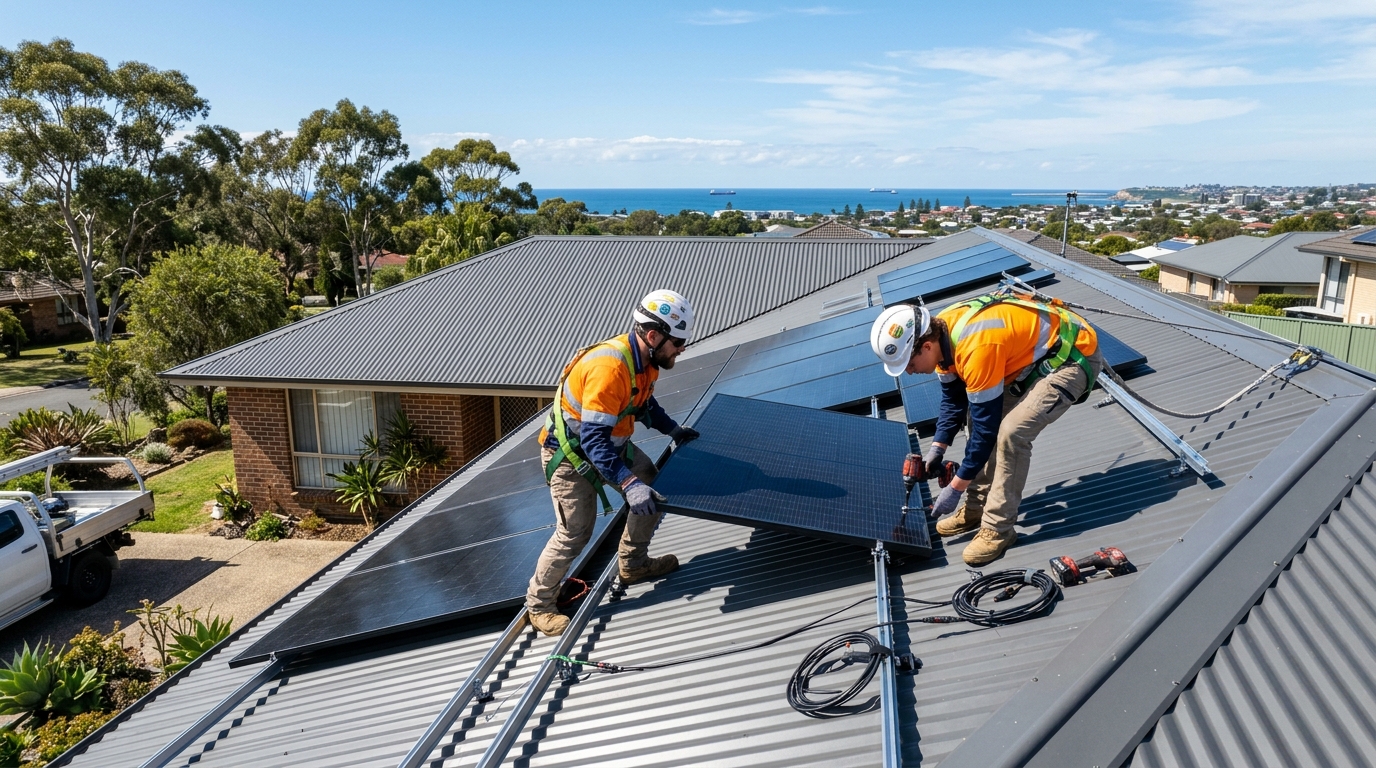
For a standard residential job, most installations wrap up in a single day. Panels go on the roof, the inverter is mounted (usually in the garage or on an external wall), and the system is wired and commissioned. At the end of the day, your installer must be able to provide a Certificate of Compliance for Electrical Work (CCEW).
This is the part that catches people off guard. Your panels can be physically installed, but you can't switch the system on until a smart meter is fitted. The meter upgrade is arranged through your electricity retailer – not your installer – and typically takes 7–21 business days once the CCEW is submitted.
Once the smart meter is live, your system can export surplus power to the grid. Then your feed-in credits start flowing.
For most Newcastle homes, the decision comes down to three system sizes.
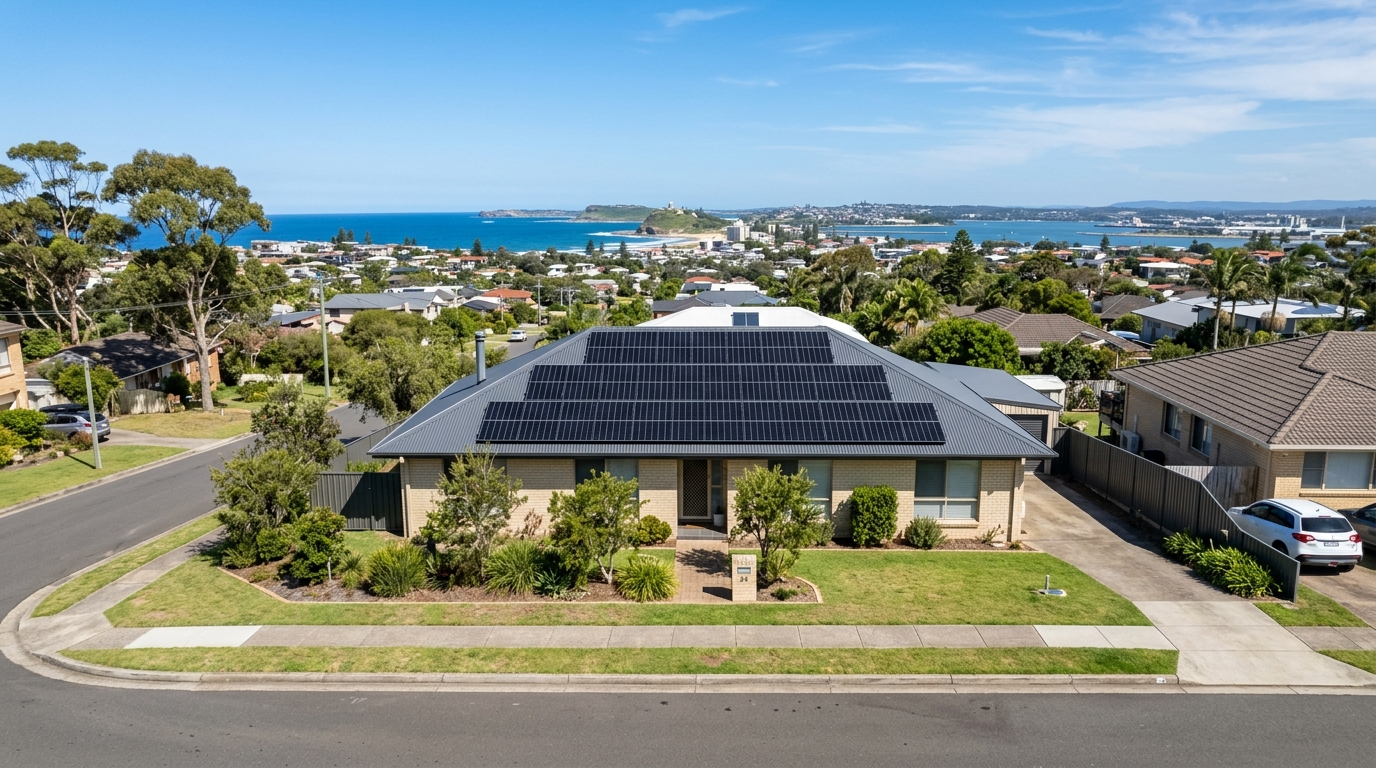
5kW–6.6kW covers a 1–3 person household with moderate electricity use and standard appliances. A 6.6kW system generates around 28kWh per day and saves most families $1,200–$2,000 per year on electricity.
10kW is where the conversation shifts for households with higher consumption: ducted air conditioning, a pool, or electric vehicle charging. A 10kW system produces around 42kWh per day and can push annual savings past $2,400.
13kW suits homes planning to add an EV, or anyone who wants to maximise battery charging and minimise their grid reliance long-term.
Our blog on the solar panel cost in Newcastle breaks down exact pricing at each size point after rebates, including what payback looks like over 3–5 years.
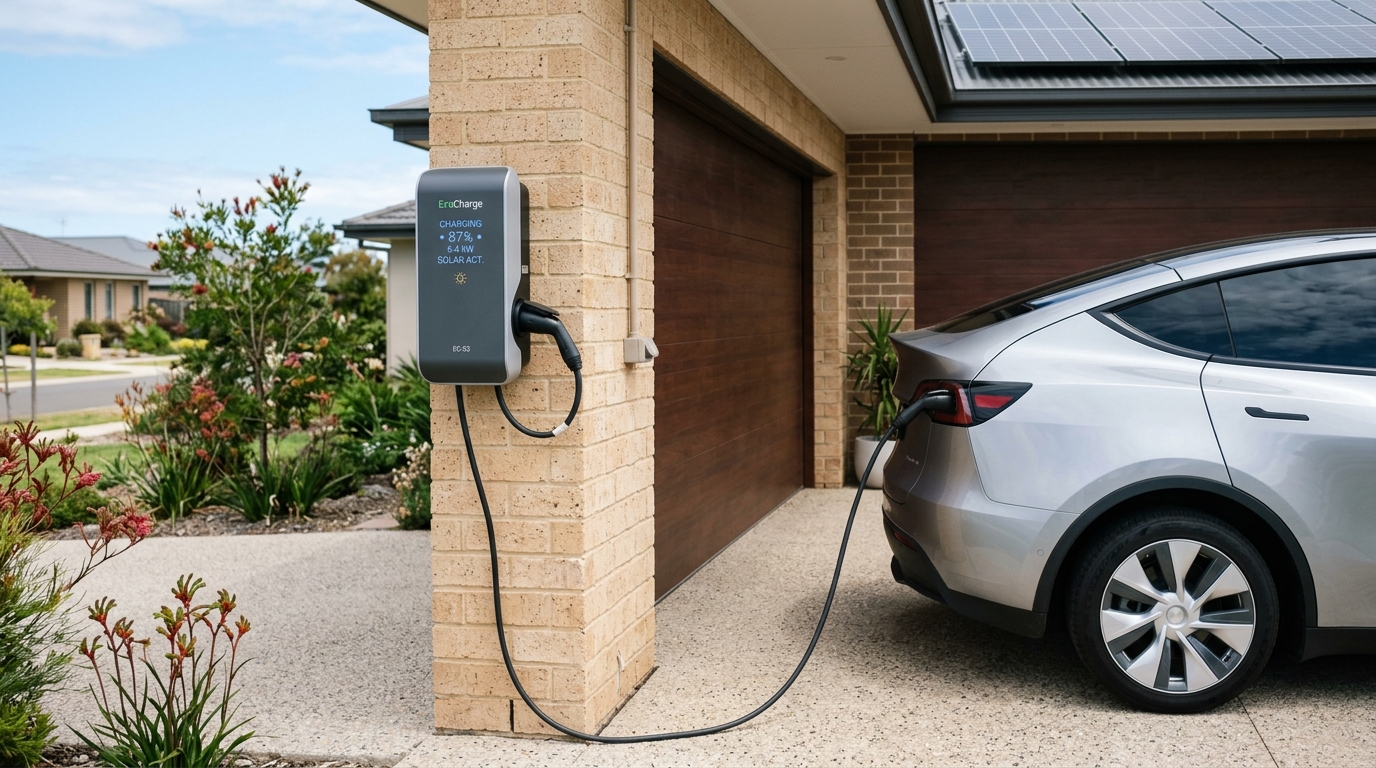
One thing to get clear early: don't size your system based on your current usage. Think about where your consumption is heading. If you're planning to get an EV in the next few years, that changes the calculation significantly. You can read more about the best solar setup for electric vehicle charging in Australia and how to size accordingly before you commit.
Not sure which panel technology makes sense? Our guide to the different types of solar panels compares monocrystalline, polycrystalline, and thin-film, explaining why monocrystalline is the right call for most Newcastle rooftops in 2026.
The fundamentals are the same, but commercial solar power in Newcastle involves a few additional considerations.
Commercial systems are sized against load profiles (peak demand periods, operating hours, shift patterns), not just total consumption. A business running heavy equipment during the day has a very different solar opportunity from a retail space. Battery storage often makes more commercial sense for businesses that can reduce their demand charges by drawing stored energy during peak pricing periods.
For businesses, the STC rebate still applies, though the dollar value scales differently at larger system sizes. Commercial installations also frequently qualify for accelerated depreciation under the Australian tax system, which is also worth discussing with your accountant before you finalise a budget.
Approval timeframes for commercial systems can be longer, particularly for systems above 30kW, where Ausgrid's network capacity assessment process is more detailed.
Three solar installation rebates in NSW are currently available to Newcastle homeowners, and they can all be applied to a single installation.
One important note: STC values decrease each year until 2030, so the rebate available today is worth more than it will be in 12 months' time.
Full details on stacking these rebates, including eligibility requirements, are on our solar installation rebate NSW page.
If upfront cost is the sticking point, our finance for solar panels page covers $0 upfront options for both residential and commercial customers.
As with any major electrical works, due diligence is important when choosing your solar power installers.
For properties not connected to the grid, or homeowners wanting genuine energy independence, off-grid solar is a different conversation. System design is more conservative, so you need enough generation and storage to cover extended overcast periods, not just a typical sunny week.
Off-grid sizing usually involves a larger battery bank and a backup source (often a generator) for extended low-generation periods. If you're exploring this, it's worth getting a detailed load assessment done rather than estimating from your current bills.
Whether you're looking at residential solar panels in Newcastle for the first time or comparing quotes for a commercial system, the starting point is the same: a proper site assessment based on your actual usage.
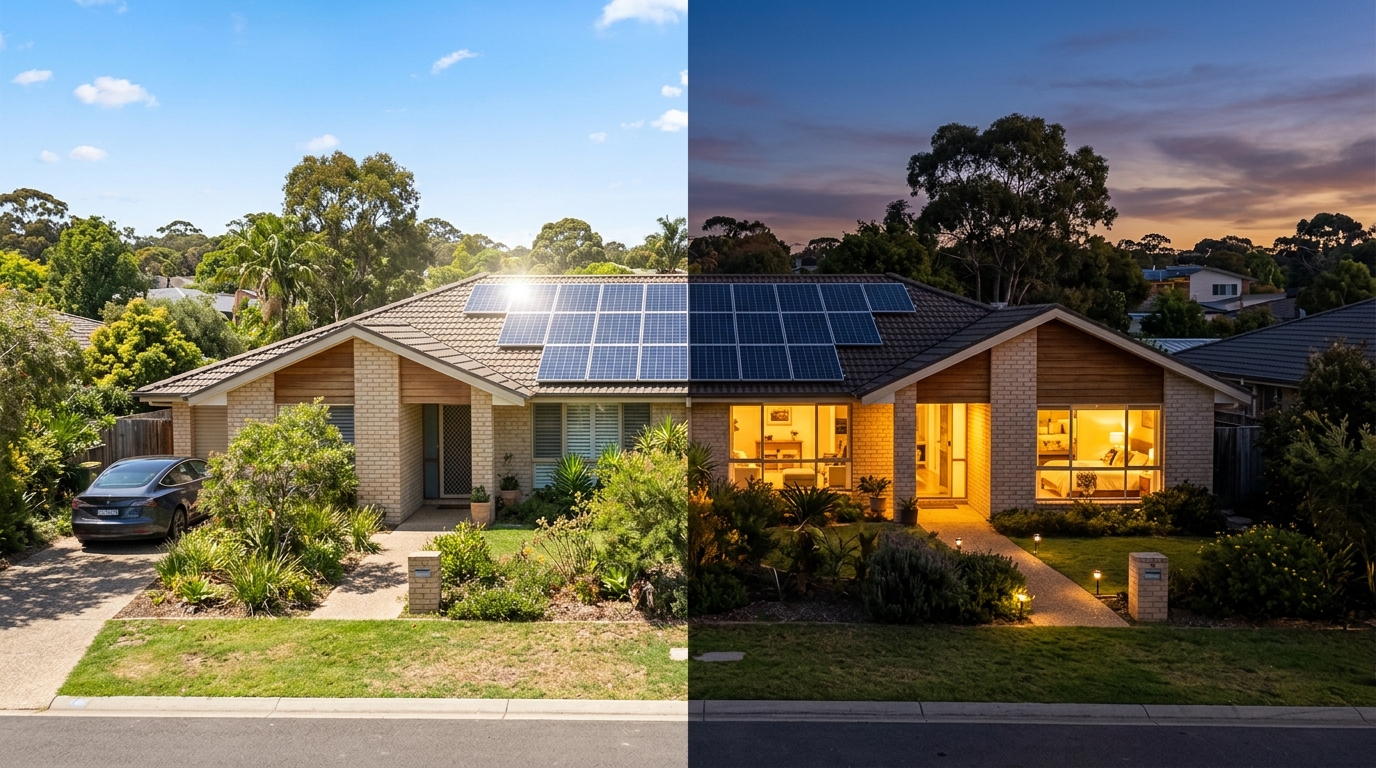
A 6.6kW system on a Newcastle family home will typically pay for itself in 3–5 years and then save you money for the next 25. Add a battery, and your evenings come off the grid too. Add an EV charger, and your fuel costs effectively disappear.
The STC rebate shrinks each year until 2030. Battery rebates are available now. And with Newcastle's strong sun hours, systems here produce consistent returns across all four seasons.


-1.png)